DMZ #3
Our final instalment, in which your correspondent descends into the Third Tunnel of Aggression and visits the world’s most underused train station

[LINKS TO PARTS 1 & 2 AT THE BOTTOM OF THE POST]
The most dramatic stop on our tour of the Korean DMZ is also the least photogenic.
When we get to the Third Tunnel of Aggression, we get asked whether we have any heart defects? Any other physical vulnerabilities? Are we claustrophobic? If we answer no to all these questions, we are permitted to hand in our phones and go claim a canary-yellow hard hat from the smiling woman at the front desk.
The tunnel was the third in a series of discoveries made, this one in 1978, confirming an extraordinary plan by the North to invade the South, not through the DMZ, but by burrowing right underneath it. This is no Shawshank Redemption escape hatch though – the tunnels were designed to be high and wide enough for at least three marching soldiers to be able to walk through side-by-side.
30,000 armed men, per hour, per tunnel – that was the plan.
A visit entitles you to enjoy the long descent through the “discovery tunnel”, walking in a permanent semi-crouched position, plunging ever deeper into the soil until you finally reach the place where the enemy’s plan was exposed. The sightseeing stops there, but the total length of the tunnel is 1,600 metres and down at the bottom it’s impossible to imagine ever seeing sunlight again. The packed earth – above, below, left and right – is a rich brown, like molasses, the makeshift soil walls sweaty with condensation, and now there’s you too, threaded through the middle like a corpse. When you’re back out of the tunnel again, your eyes and lungs struggle to adjust to the endless flood of light and air, even though it’s barely been thirty minutes down below.
What would it have been like as a soldier? An endless trudge, cold rifle steel in hand, rations on the back, crouching a little through the darkness on the promise that the enemy awaiting you on the other side – soldiers and civilians alike, extended family perhaps – is wholly deserving of their coming annihilation. How far would the invading force have made it down through South Korea? How many would have defected? Did they really expect to rampage all the way down to Seoul, 50km away, on foot, armed with nothing but their rifles and daggers? Or, as many believe, were the tunnels mere posturing, always intended to be discovered? Another performance perhaps, this time of martial readiness.
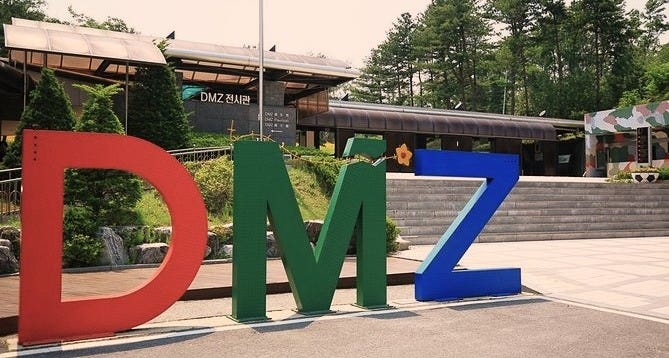
Deep thoughts suddenly seem out of place back on the surface, where there is little to do but wait for our bus driver to reappear. Beside the parking lot is a sculptural sign, spelling out D and M and Z in giant red, green and blue letters. A brand with nothing to sell but awkward selfies. Chance insists that I have my picture taken next to it.
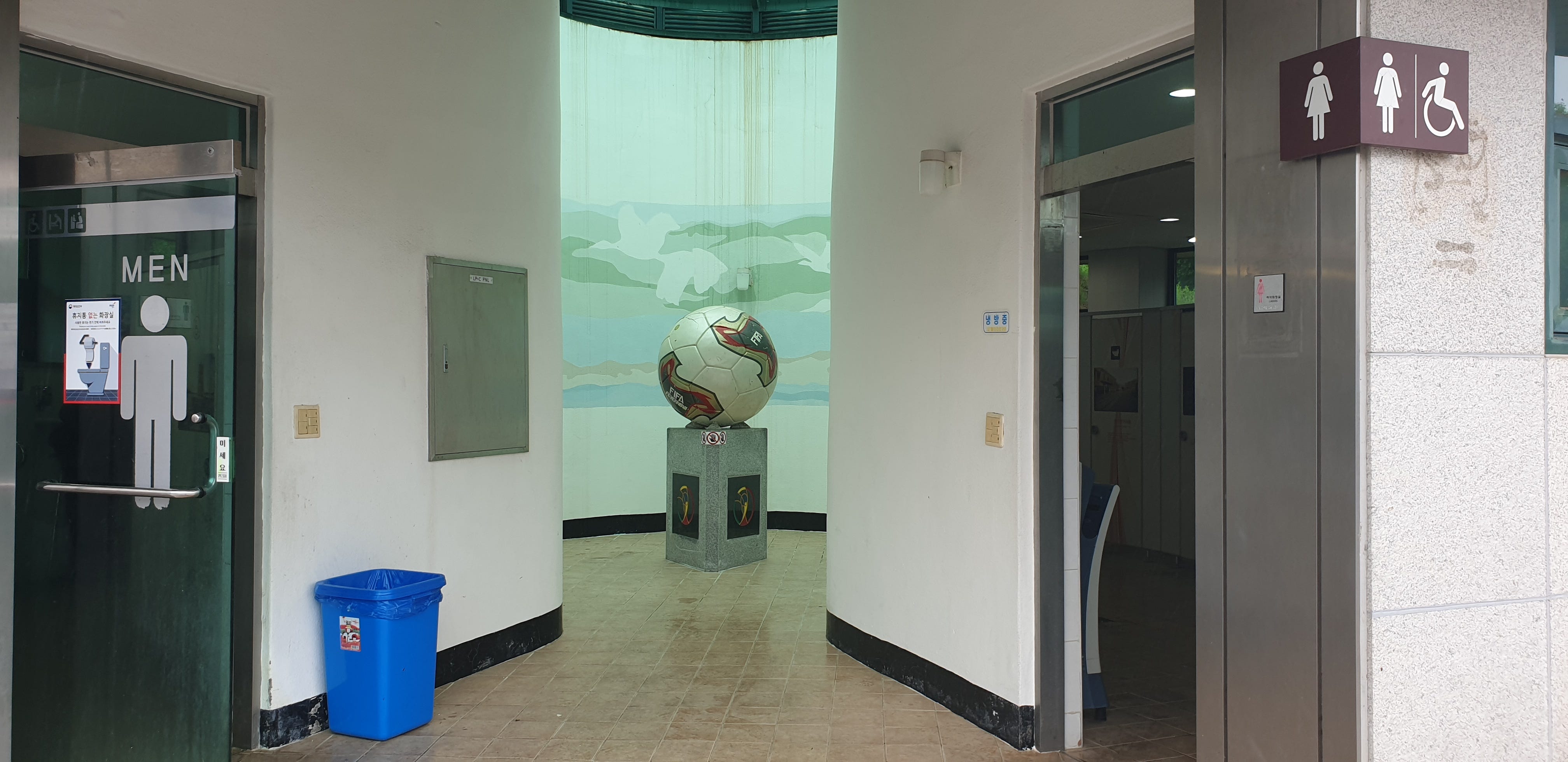
Over in the toilet block sits a five-foot-tall replica of a football from the 2002 World Cup, joint-hosted by South Korea and Japan. The DMZball’s plinth and location offer no explanation, save for signs which seem to convey Do Not Touch in a richly diverse mix of symbols and languages. The hidden message of the plastic ball seems to be that this one game, football – soccer, fútbol, calcio, 축구, and so on – is a truly global endeavour. No borders, no boundaries. That there is truly no location on the planet too obscure for FIFA to grace with its trademark incompetence and corruption.
Chance’s itinerary ends with us back in Seoul at The War Memorial of Korea. I have to confess I didn’t pay much attention to this part when booking my trip, so when we get there I’m surprised to find that it’s not a “memorial” so much as an enormous museum of military history, surrounded by decommissioned artillery and vehicles of inhuman proportions.
You go in, Chance says. I will wait in the car.
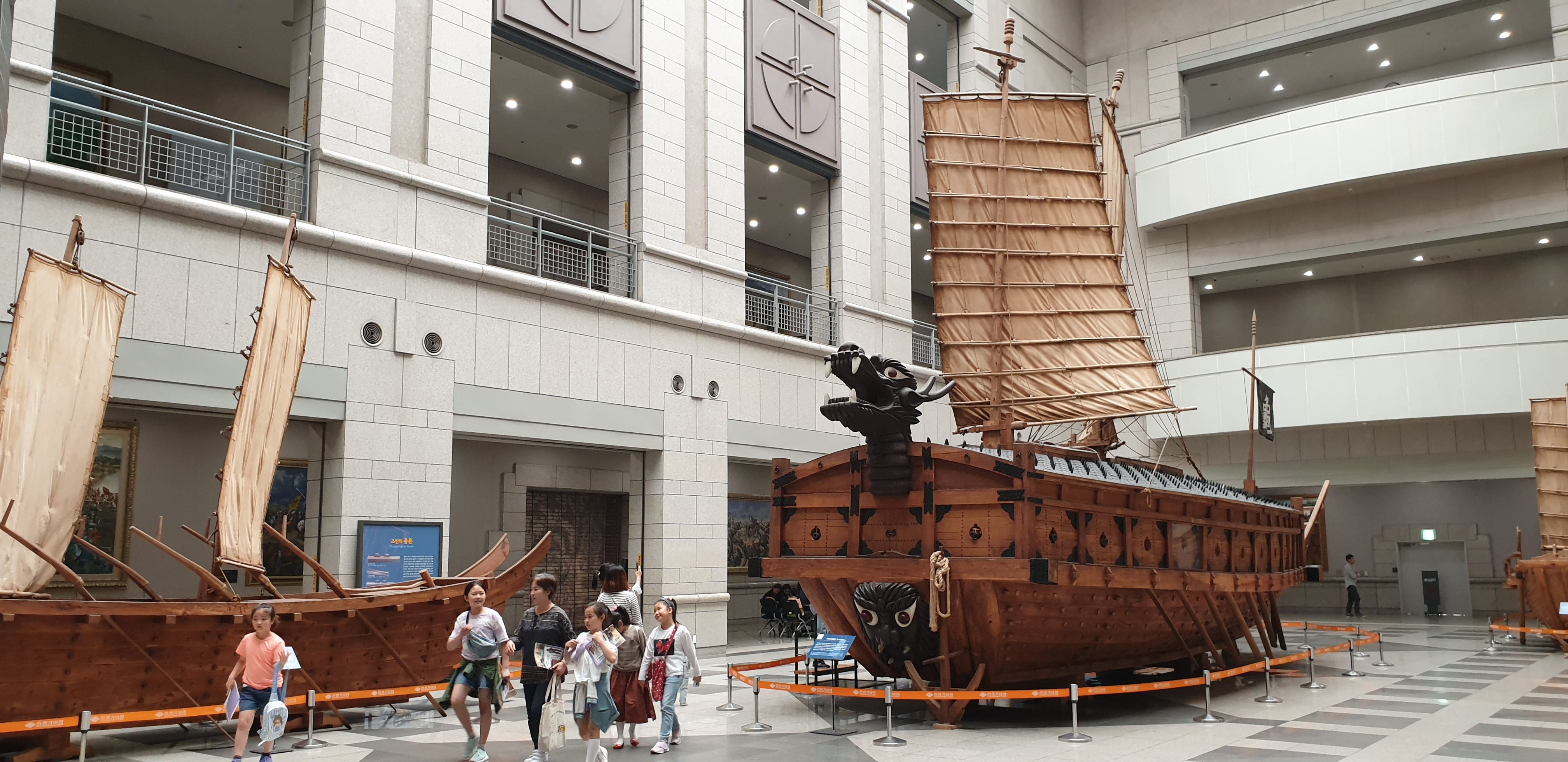
In the main hall is a magnificent replica of a 16th-century Geobukseon – an armoured, manoeuvrable “turtle ship” covered all over in plates and metal spikes and adorned with a dragon’s head designed to blow poisonous smoke out upon its foes. A reminder that, before it was the North, the imperial armies of Japan and China were the enemies to fear in this part of the world.
In the rain outside there are retired fighter jets with villainous smirks painted upon them, hulking grey tanks and boats, and troop-carrying planes of impossible size, designed to house and deliver entire villages of human aggression upon any target population.


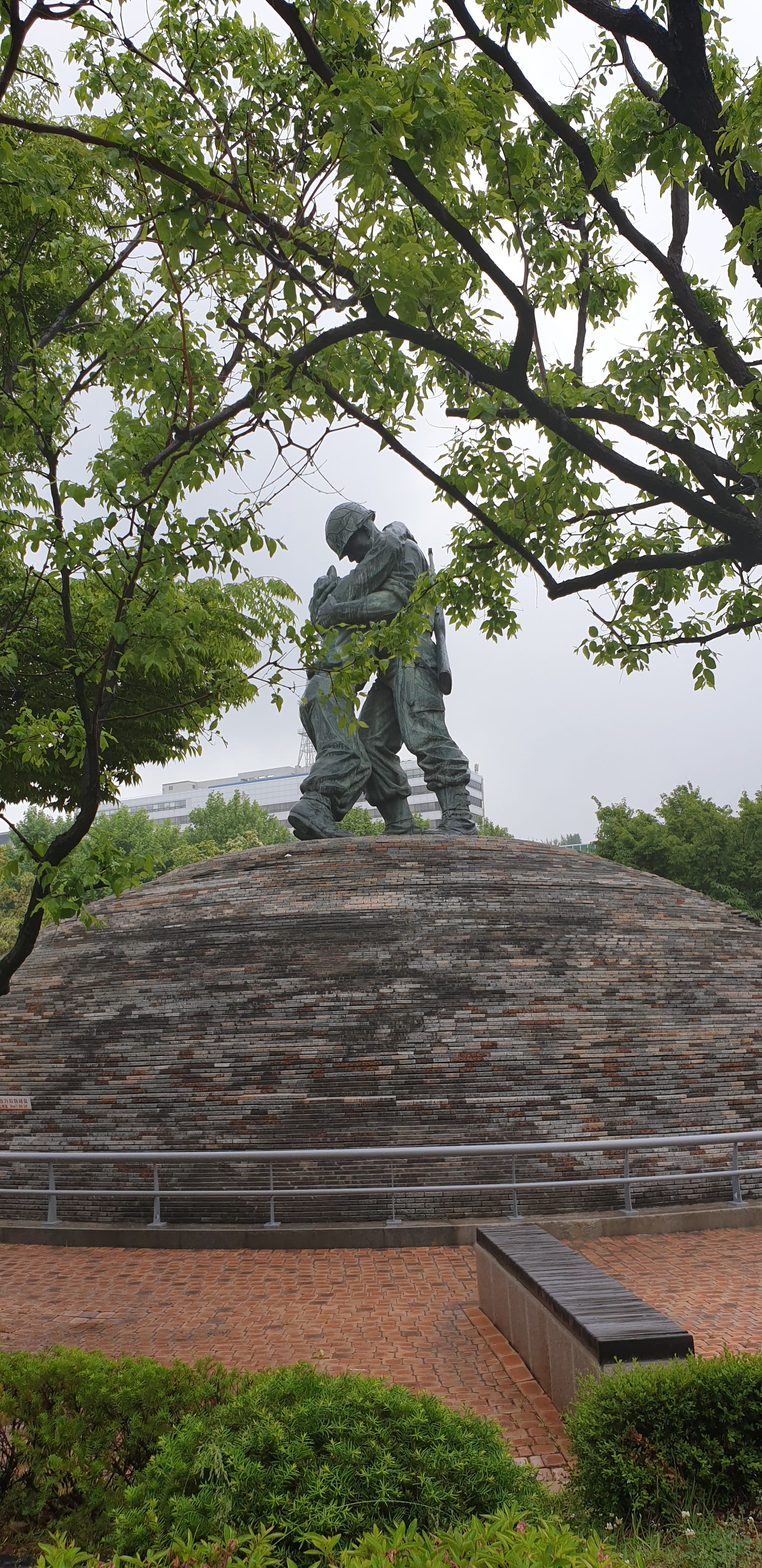
When I head back to the car park, the last thing I see is a towering sculpture of two soldiers embracing. They are said to be brothers, an elder South Korean and a younger North Korean, reunited on the battlefield and fallen into each other’s arms. They stand on a granite dome, a symbolic tomb for all those dead in the conflict to date – over 3 million soldiers and civilians just in the 1950s alone – which has started to crack.
When I return to his car, Chance has disappeared. Then I look again and realise he’s snoring away in his flattened front seat.
When Chance was a soldier, he had told me, he spent most of his time waiting. The Americans teach you how to kill people, you learn all the very best ways to kill people, but then you just wait. For hours which become years.
You man endless patrols through unpopulated tracts of land. You operate checkpoints with no visitors. You look out across the border for signs of activity which never materialise. Volunteers teach the conscripted how to shoot their guns, and how to fight hand-to-hand, but no one ever expects to use their training in real life. There are military exercises, but mainly there is just exercise – lots of long runs, often carrying heavy packs, sometimes in the middle of the night, for no purpose but to murder time and any energy for mischief.
More than anything, Chance tells me over and over again, being a soldier is about waiting.
XXX
There was one other stop on our official DMZ tour which I forgot to mention before: Dorasan station.
It’s a slick, modern-looking station, all glass, chrome, steel and the occasional oil painting. It was built in 2002, with tracks heading south; but finished in 2007, with tracks heading north. Outside there is a sign which points both south towards Seoul (56km) and north towards Pyongyang (205km), but at the moment the only trains visiting the station come from the south, infrequently. And they simply terminate here before backing out south once more.
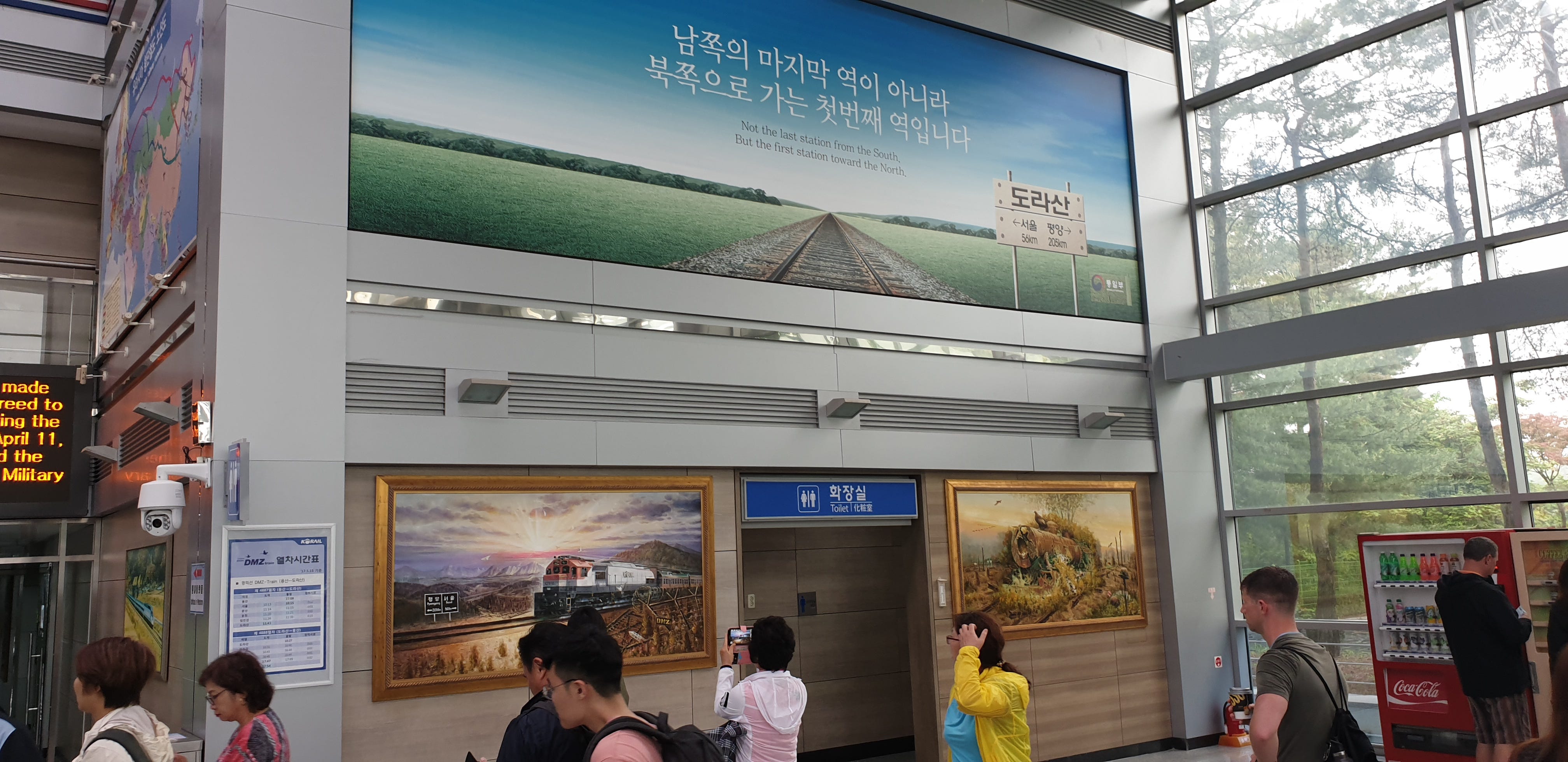
Inside the station are empty shops and a redundant ticket office. More than a decade ago now, during a brief thaw in relations, freight trains were permitted to travel on past Dorasan and up into the DPRK, carrying raw materials to factories up there and returning south again with finished products. But the entente cordiale was short-lived. Less than a year later the tracks to the North were mothballed once again.
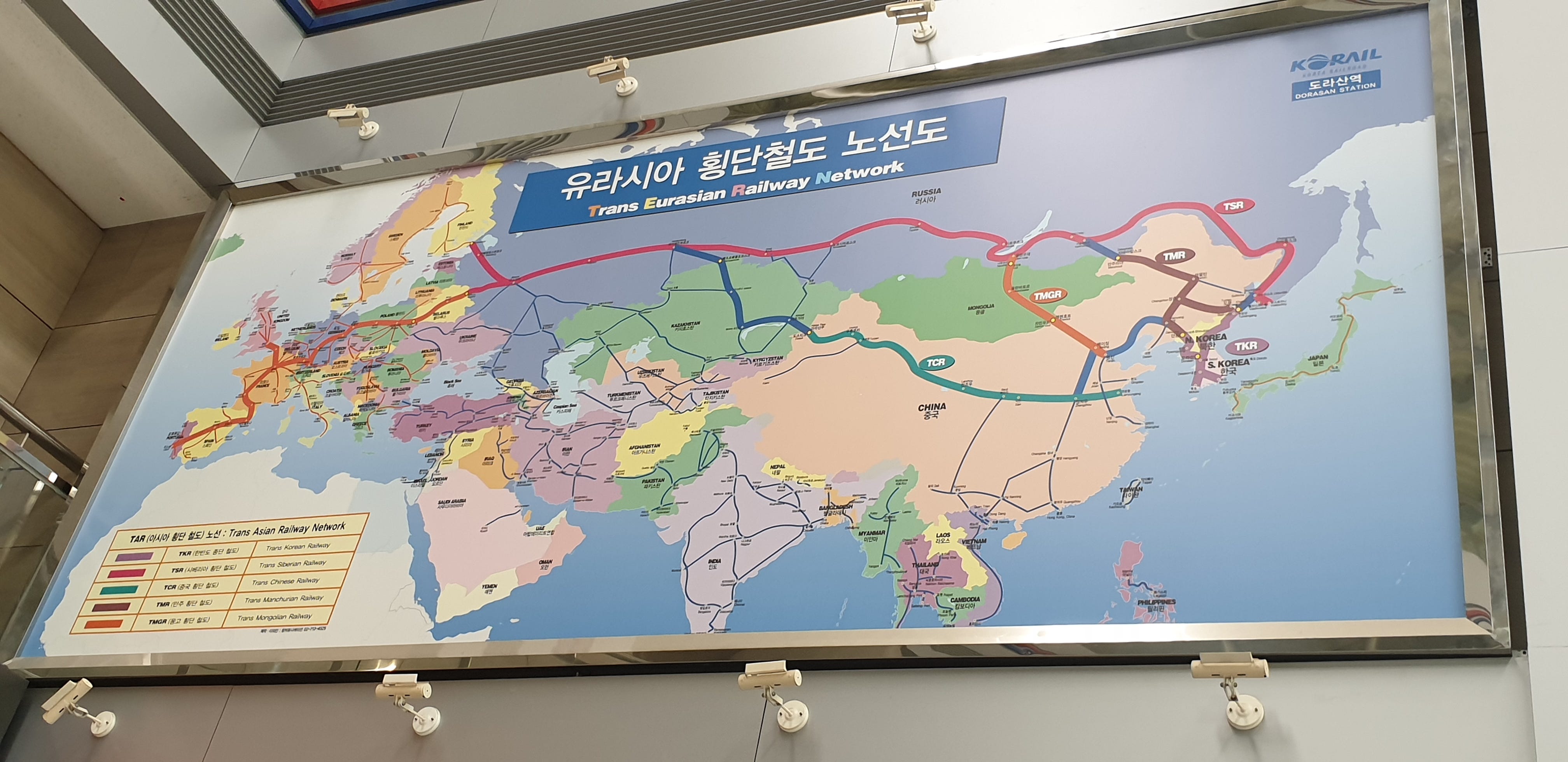
High up on the wall of the station is a giant map of Europe and Asia, a visual representation of what could be once more – of how this small, largely symbolic train station could (theoretically) connect all of the Korean peninsula to all of China, then on to Russia, to Mongolia, to Kazakhstan. It stretches west, with all of the great mythic railways represented in thick blue, red, and green lines – the Trans-Siberian, the Trans-Mongolian, the Trans-Manchurian. A map which shows lines reaching out as far as Scandinavia, Ireland, Portugal, even if right now not a single train ever travels a centimetre north of the station.
It’s a fine line, I think, between hope and propaganda.