
DMZ #1
In which your correspondent avoids a cat café by travelling to one of the most heavily-armed borders on the planet

PROLOGUE: Sometimes I get to travel to interesting places for work, which is both blessing and curse. This is the story of one of those occasions, or at least the story of how I spent my one day off on that trip.
XXX
Chance picks me up from the hotel forecourt shortly after sunrise.
He shakes my right hand, presses his business card into my left, tells me his full name in Korean – then immediately instructs me to call him “Chance” instead.
Chance? I repeat back to him stupidly, unsure if I’ve heard him correctly. Erm… like The Rapper? I ask, and Chance laughs at me without answering.
I have already spent a week now in Gangnam. Our hotel is apparently busy at all hours – surrounded by convenience stores with hanging bags of dried squid and squat bottles of Coca-Cola and milk soda, low-ceilinged restaurants rich with gochujang fumes – but this morning it was just me and steel roller-doors on the streets. I waited alone in the lobby for thirty minutes before Chance’s silver SUV pulls up on the road outside. Even the hotel staff aren’t awake yet.
My colleagues and I have been working non-stop for weeks – Hong Kong, then Shanghai, then Tokyo, now Seoul. The others are using our one allocated day of rest and recuperation to visit the best cat café in Seoul and to stock up on their pots of snail cream. I have decided to visit the Demilitarized Zone instead.
The DMZ is 4km-thick and 250km-long, belting the waist of Korea. A no man’s land visible from space by its absence of light. A begrudgingly-accepted buffer between South Korea (officially known as the Republic of Korea) and North Korea (the Democratic People’s Republic of Korea). Both countries are republics of a kind, but only one is passably democratic these days. It is not the DPRK.
I booked my outing with Chance online before I left home. The trip was considerably more expensive than expected, but the only way that you can visit the DMZ is to be accompanied by a licensed tour guide and the only alternatives were with coachloads of people – which would be absolutely fine except for the compulsory Soju-tasting sessions and stops at souvenir shops which come bundled into your trip, all the way there and all the way back again, until the late evening.
I know, based on the schedule that he sends me in advance, that Chance and I will spend at least three hours together in this car today, just the two of us, so it’s a relief to find that he is a good storyteller. Chance asks a few routine questions about me, but mainly he tells me about his own life – his two years spent in the army as part of South Korea’s compulsory military service, his strong opinions on various western nationalities and (unrelated) the latest plastic surgery trends, his love of hiking and mountain climbing.
Chance tells me that he would much rather be showing visitors the incredible countryside all across Korea – Seoraksan National Park, say, or Jeju Island, or Daedunsan Mountain – but there is more demand for his DMZ tour than everything else put together. I feel guilty, apologise. He laughs at me again.
We drive through still-sleeping Seoul, past the neglected neon of Gangnam’s fashion retail and surgery clinics, to the countless silver high-rises studding the banks of the Han River. Chance points out the two “Trump World” towers as we drive past them – giant Pringles tins rolled in cheap terracotta cladding – and we both mutter curses under our breath.
We cross an enormous bridge and head north, buildings shrinking rapidly until it’s clear that we’re no longer in the city at all. Then we talk and drive through the countryside for a long time, speeding north past all the same commuter towns and budget roadside diners that orbit any large city.
Seoul long behind us, Chance instructs me to look over into the distance on our left-hand side.
- You see it? The place where there are no trees anywhere?
- I see it.
- That is The North.
- Really?
- Really, he replies. They have no fuel there, so they cut down every single tree to burn.
Now, as we progress ever further north, the DMZ encroaches to our left, until eventually we are just centimetres away from barbed-wire fencing running parallel with the road. Every few hundred metres we pass abandoned guard shacks on stilts, the only buildings in sight, painted in camouflage patterns.
The roads have been empty throughout our journey here, so it’s a surprise when we pull into an enormous parking lot already half-full with hundreds of cars and coaches. It looks like a theme park.
- I need your passport, says Chance.
I knew this was coming, so I hand it over. Even so, as I watch him walk off and disappear between the parked cars, I wonder at the wisdom of handing over my passport to a man I’ve known for barely an hour, here on the border with North Korea, with no other means of getting back to Seoul. Or anywhere else for that matter.
- Go look at the train, he shouts back to me.
I wander over in the direction he points me towards. It’s impossible to miss.
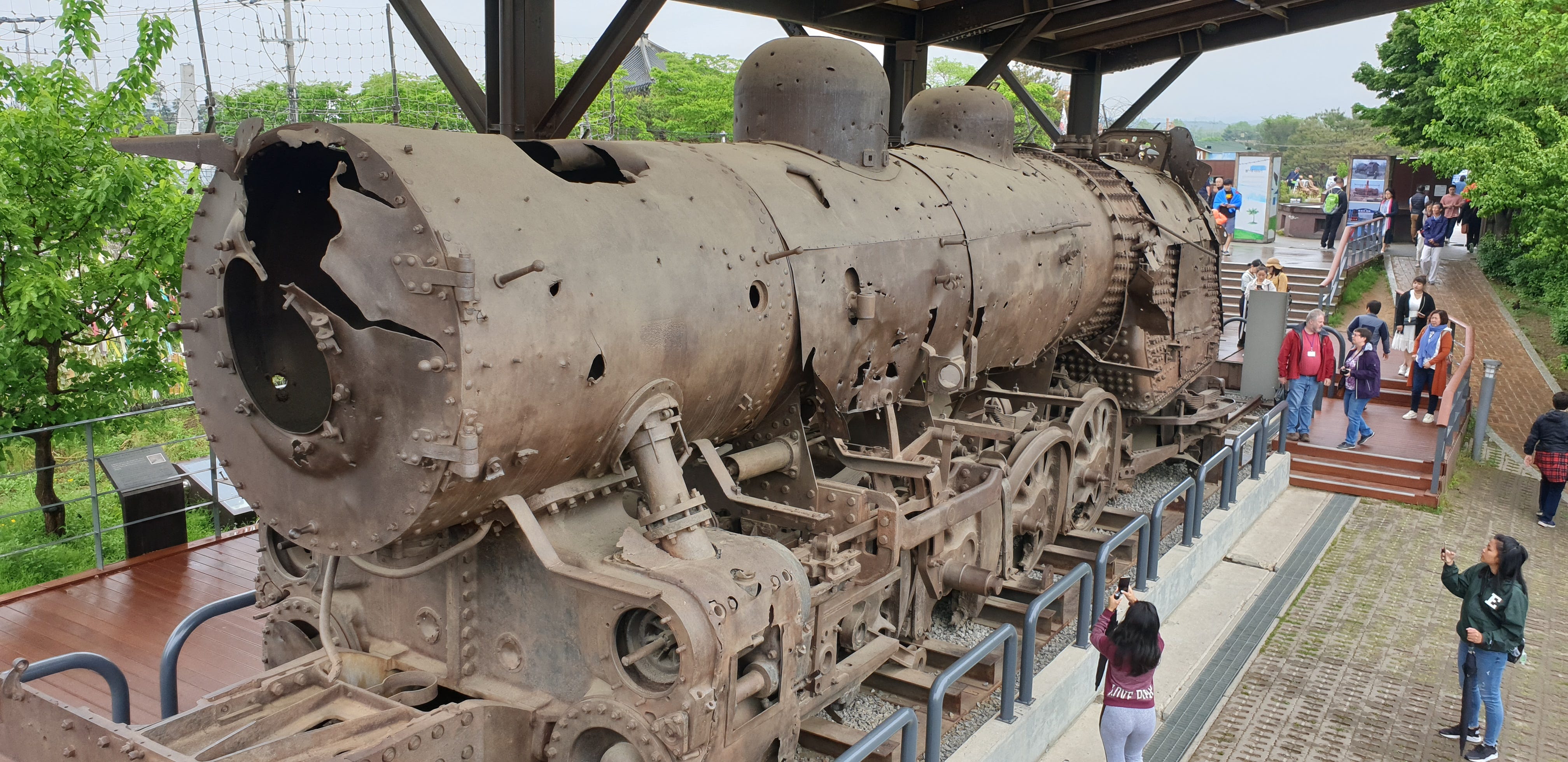
The train is a steam train. Was a steam train. Now it’s rust in the shape of a steam train. The story goes that the train was stranded on the border when bombs from the nascent Korean War destroyed the tracks and it derailed. There are thousands of bullet holes in the rust, which “show the cruel situation at the time” according to the accompanying signage, but I’m told that most of these fissures occurred long after the real fighting was over. Bored young men, from both sides, once liked to use the unlucky train for target practice.
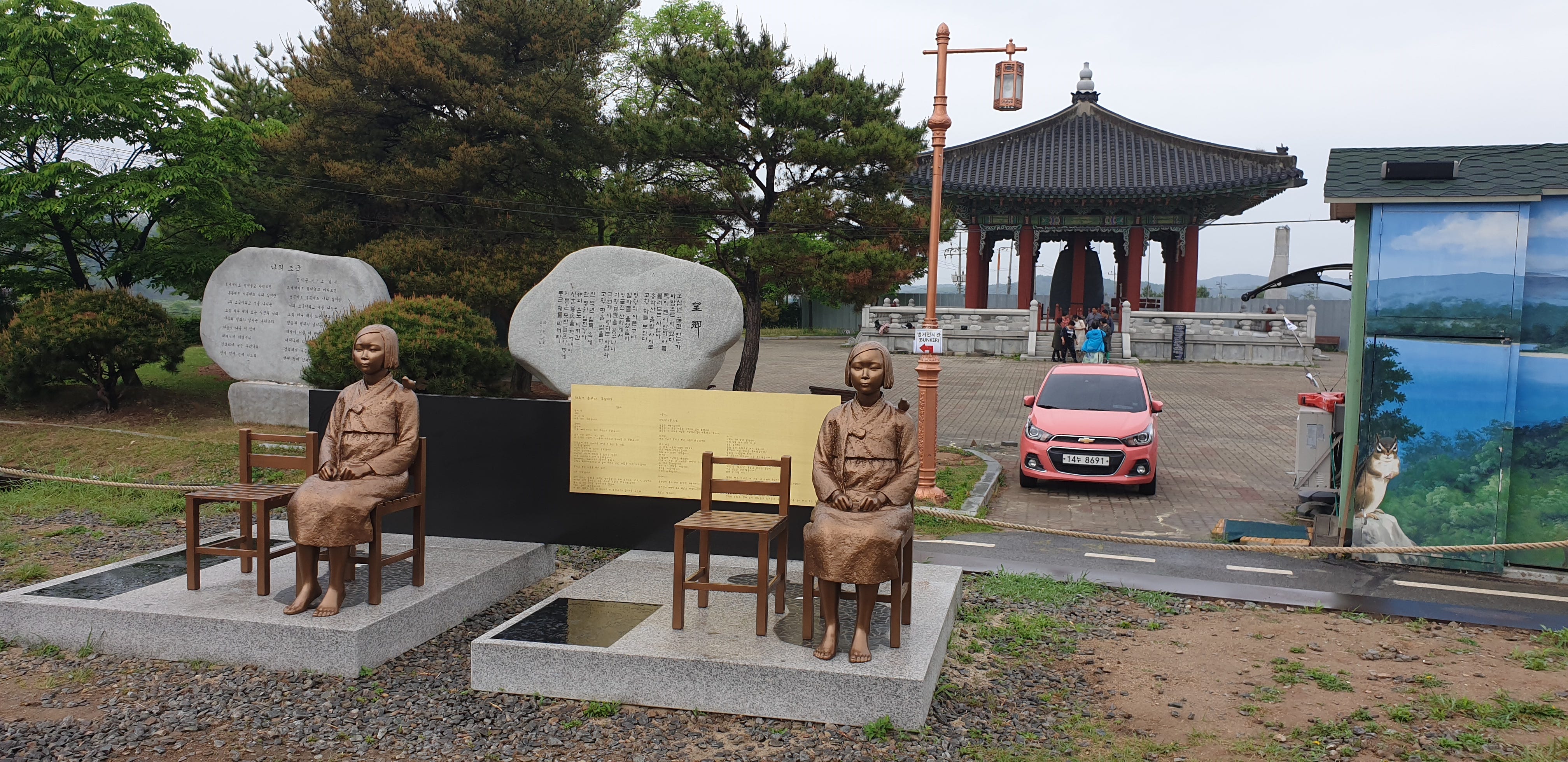
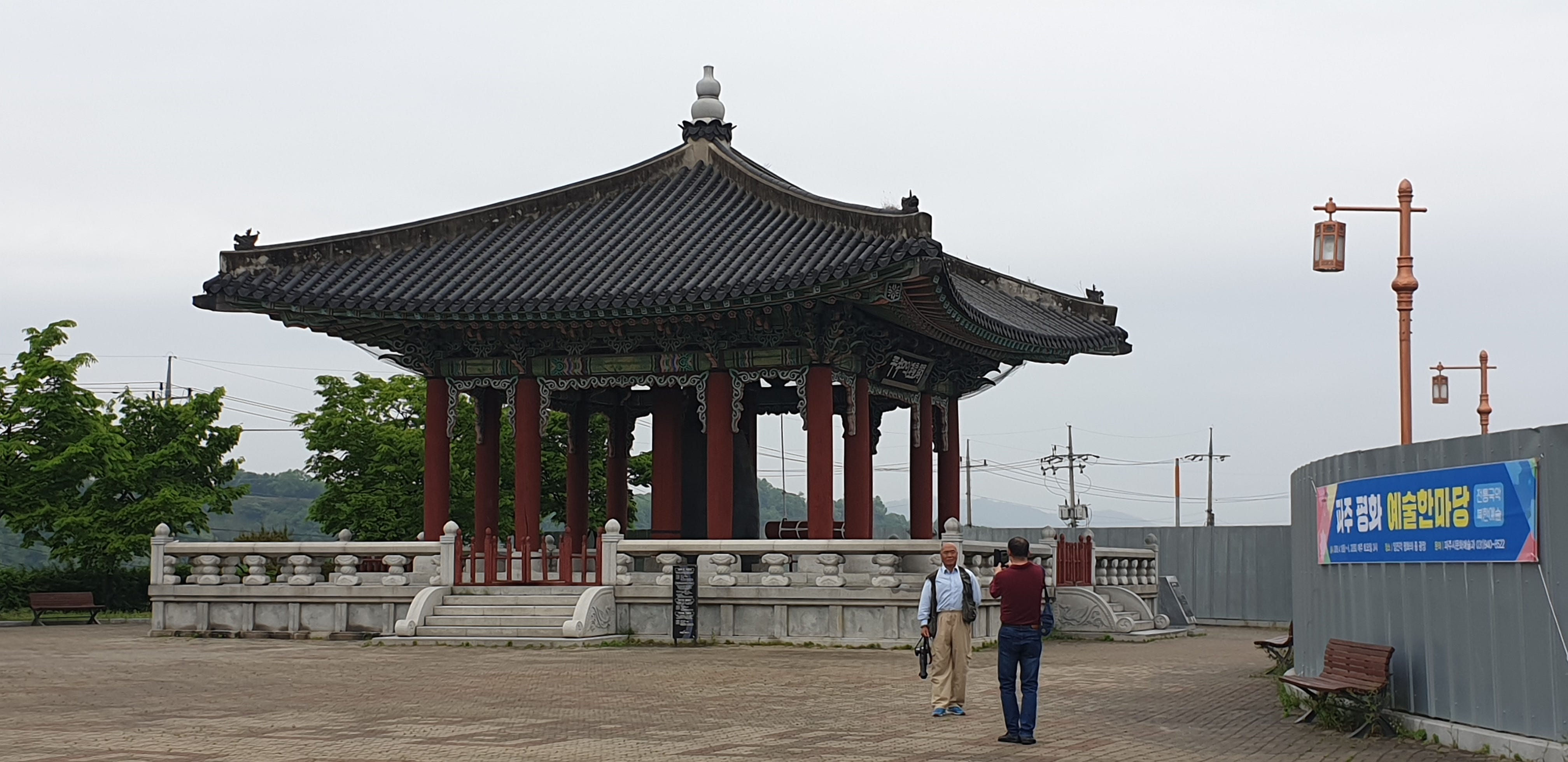
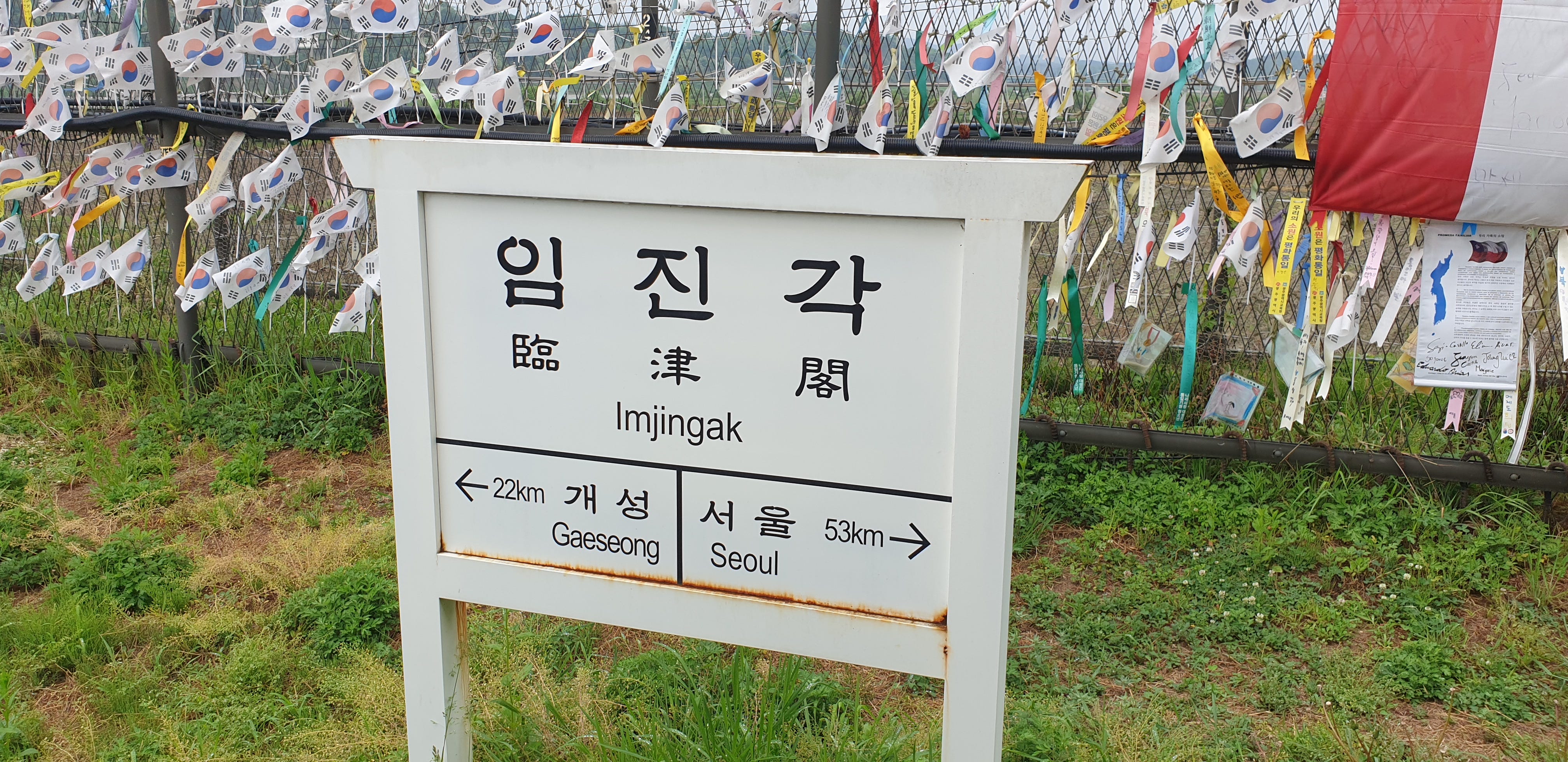
As I wander around this peripheral place, Imjingak Resort, gateway to the DMZ, it seems impossible to reconcile its various tones. There are other quiet places like the train – statues and war memorials, in so much concrete and bronze, with solemn plaques – where groups of Koreans stand with heads bowed. There are thousands of brightly-coloured ribbons of remembrance tied to the fences beneath barbed wire. There are waxwork effigies with signs hanging around their necks – they represent South Koreans who have spent many long years waiting to be reunited with their relatives trapped in the North.
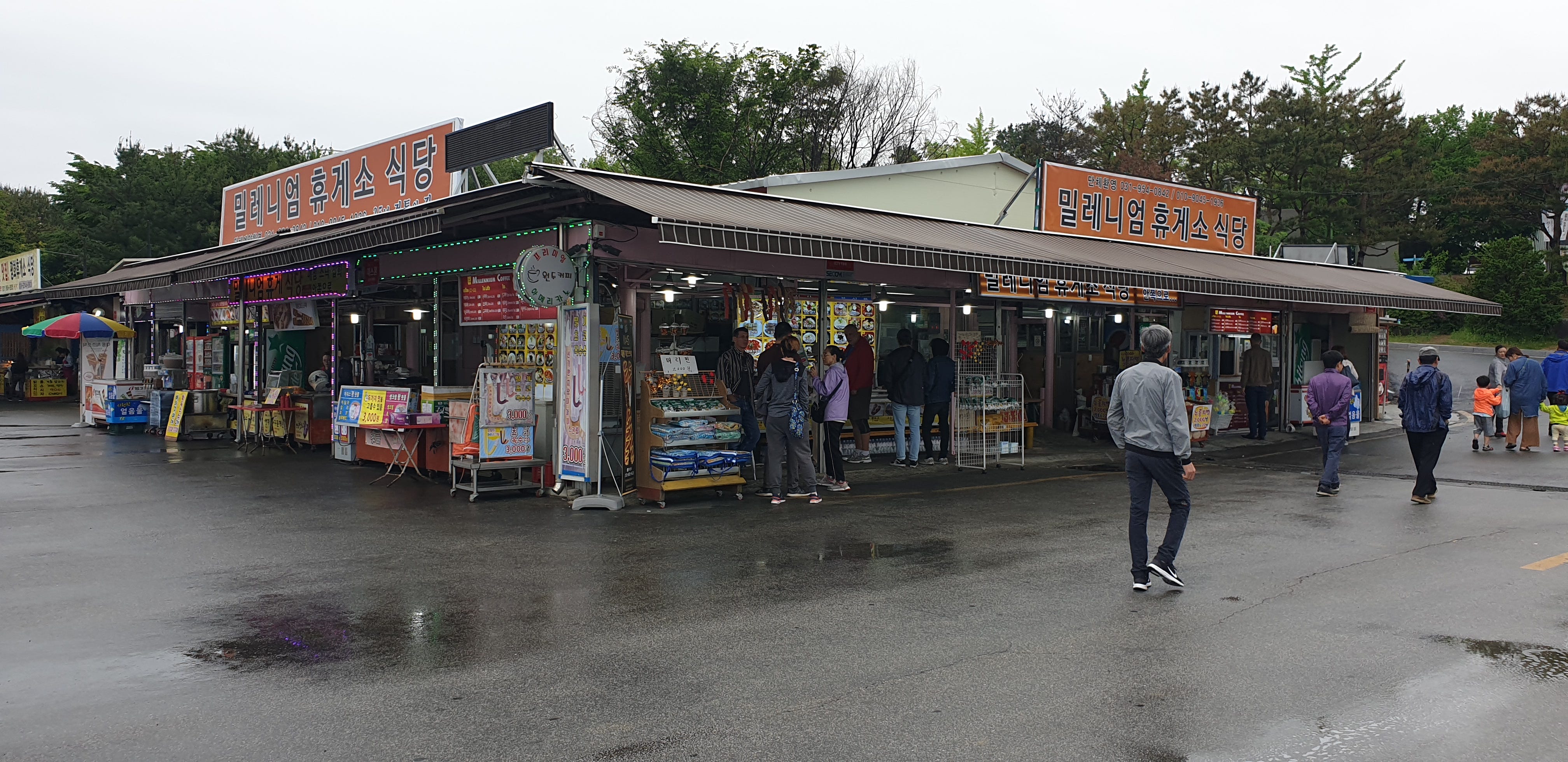
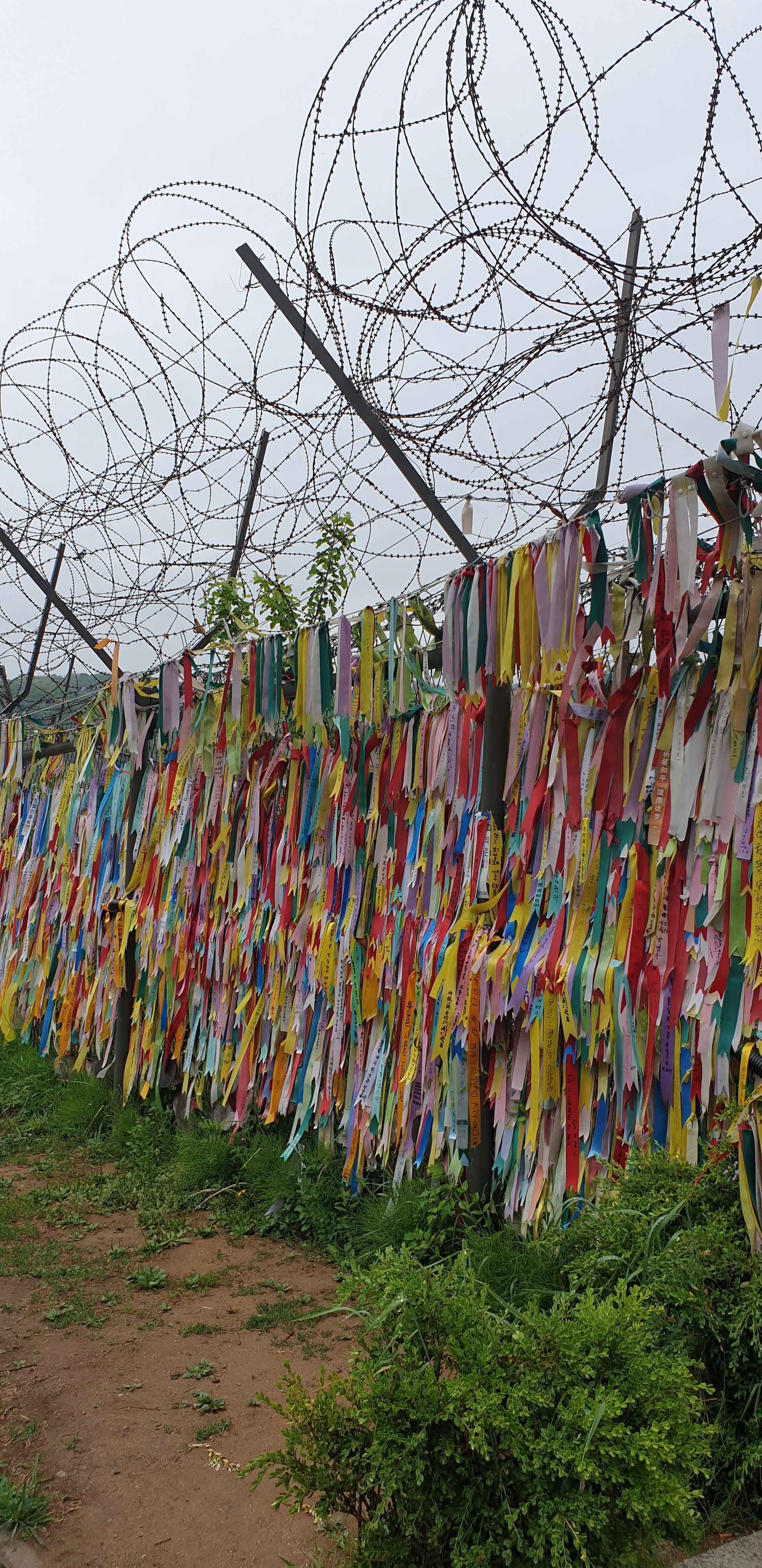
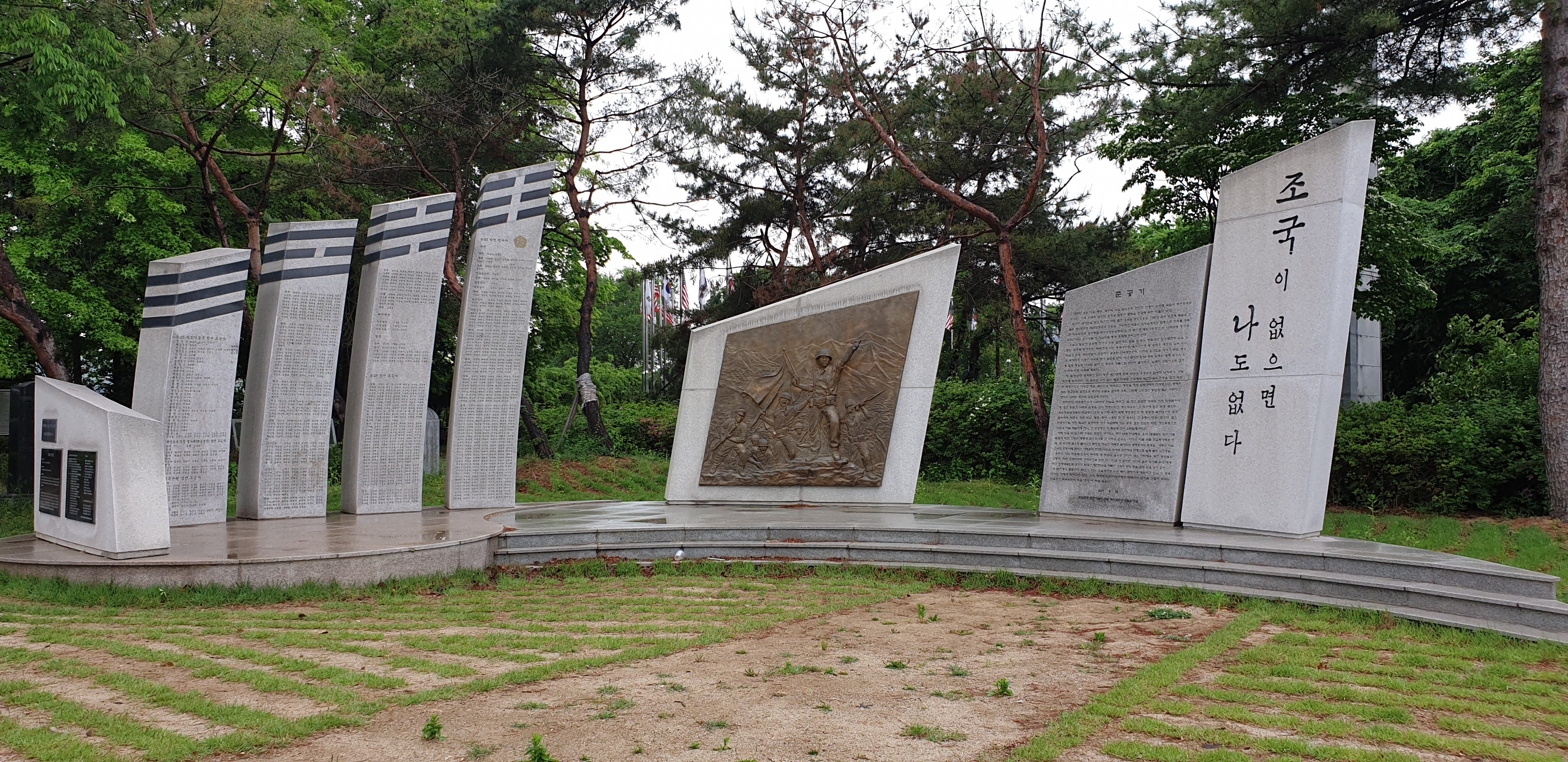
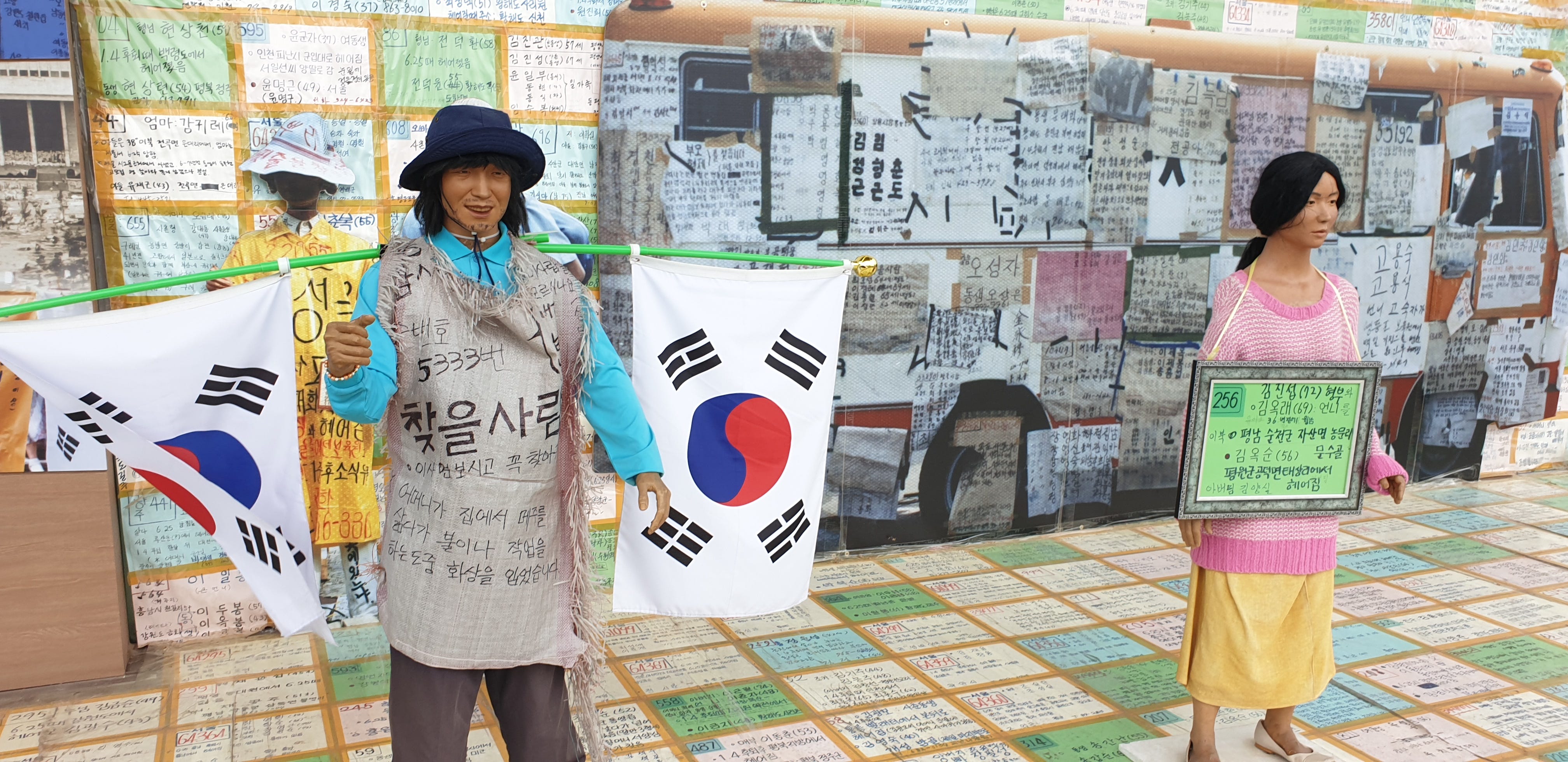
But there are also steam-bellowing food stands, and souvenirs shops selling North Korean wine and North Korean bank notes. There is a symbolic bridge too, to be used when all those lost relatives can finally stride back across the border. But the bridge is guarded by two giant plastic statues of a military man and a military woman – him wearing aviator sunglasses, her a mini skirt – in bulbous, cartoony dimensions. There is a small amusement arcade for children.
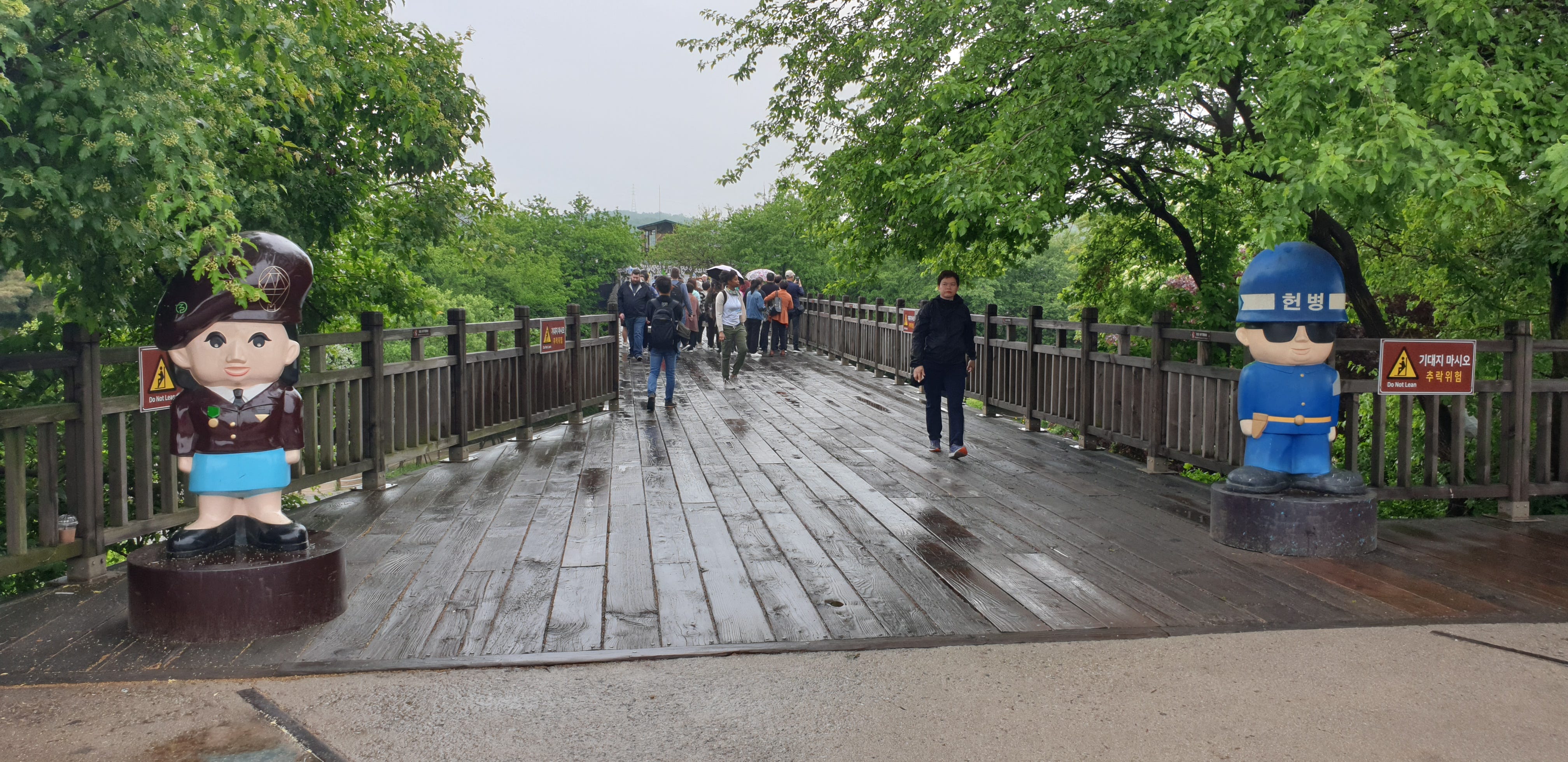
It makes a little more sense when I read that this “resort” was built in the 1970s to give mourning families a place to congregate, a place to remember the family members they could no longer even contact – families just over there – but also to encourage hope of a peaceful resolution, coming someday soon.
But I can’t stop thinking that those children whom people made plans (and buildings) for then are middle-aged now, have children of their own, a further two generations detached from knowing those cut-off relatives in the north, and with Korea still no closer to reunification. And then Chance returns with my passport – of course he does – and explains we are booked onto the next bus to depart.
TO BE CONTINUED